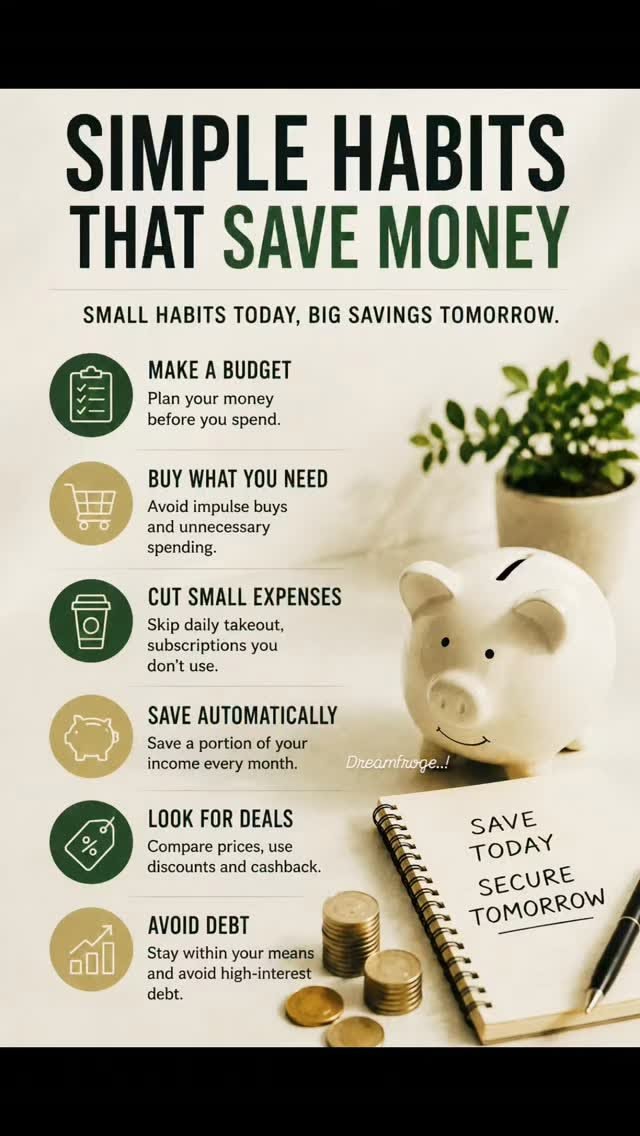
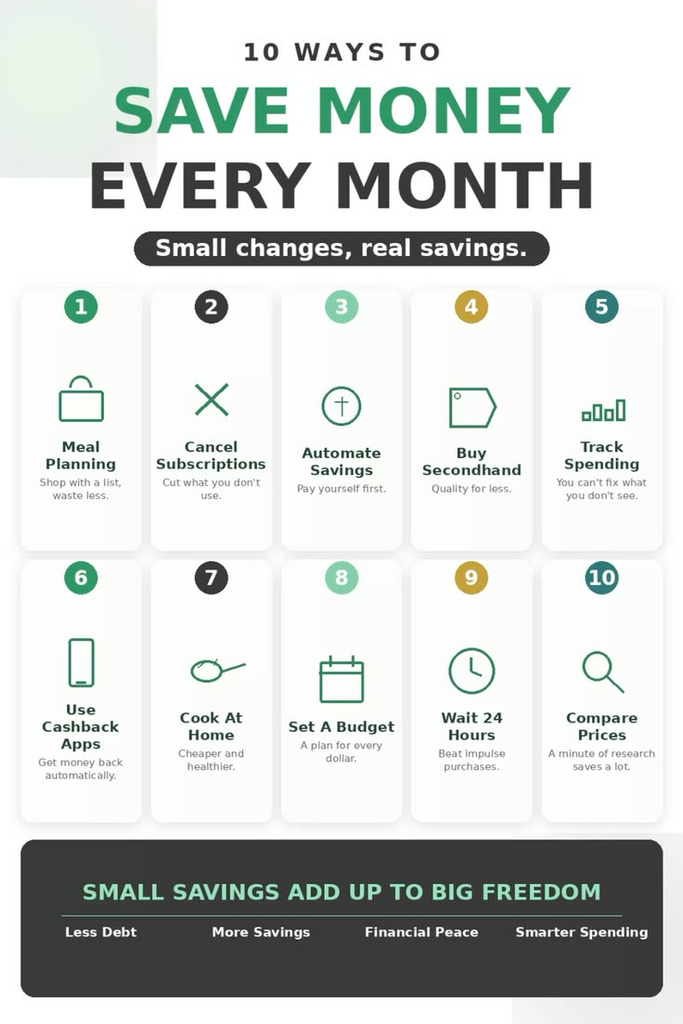
Saving money can seem almost impossible when most of your income is already being used for everyday expenses.
You may reach the end of the month and wonder where all your money went. After paying for housing, food, transportation, bills, and other necessities, there may not seem to be much left to save.
However, saving doesn’t always require putting away a large amount of money. The most important thing is creating a realistic system that works with your current situation.
Even a small amount saved consistently can help you develop better financial habits and gradually build a stronger financial cushion.
Why Is Saving Difficult When Money Is Tight?
When income is limited or expenses are high, essential costs naturally take priority.
You may have to pay for:
- Housing
- Food
- Electricity
- Water
- Transportation
- Phone and internet
- Insurance
- Education
- Debt payments
- Household necessities
After these expenses, there may be very little remaining.
This doesn’t mean saving is impossible.
It simply means your savings strategy needs to match your current financial reality.
Step 1: Find Out Where Your Money Is Going
Before trying to save more, understand your current spending.
Review your recent transactions and divide your expenses into categories.
For example:
| Category | Monthly Amount |
|---|---|
| Housing | $700 |
| Food | $300 |
| Transportation | $150 |
| Utilities | $150 |
| Phone/Internet | $80 |
| Other Expenses | $120 |
| Total | $1,500 |
The numbers above are only an example.
Your actual expenses may look very different.
The purpose is to identify where your money is going.
Step 2: Separate Needs From Wants
Once you’ve listed your expenses, separate essential costs from optional spending.
Needs may include:
- Housing
- Basic food
- Utilities
- Necessary transportation
- Required payments
- Essential insurance
Wants may include:
- Entertainment
- Restaurant meals
- Extra shopping
- Some subscriptions
- Optional upgrades
- Nonessential purchases
This doesn’t mean you need to eliminate everything you enjoy.
Instead, identify areas where you have some flexibility.
Step 3: Start With a Small Savings Target
One of the biggest mistakes people make is choosing a savings target that doesn’t fit their budget.
If you only have $30 available each month, don’t create a goal requiring $300.
Start with what is realistic.
For example:
$5 per week
could become approximately:
$20 per month
and roughly:
$260 per year.
The amount may seem small, but you’re building the habit of setting money aside consistently.
Step 4: Save Immediately When You Receive Income
If you wait until the end of the month to save whatever is left, you may discover that nothing remains.
Instead, consider setting aside your planned savings amount earlier.
For example, if you receive $500 and your budget allows you to save $10, move the $10 toward your savings goal before spending the rest.
This makes saving part of your financial routine.
Step 5: Automate Small Contributions
If your bank provides automatic transfers, you may be able to schedule a small recurring transfer.
For example:
$5 every week
or
$20 every month.
Automation can make saving easier because you don’t have to remember to do it manually.
Make sure the amount is affordable and won’t interfere with essential bills.
Step 6: Look for One Expense to Reduce
You don’t have to cut ten different expenses at once.
Start with one.
For example, you might discover that you’re spending $25 per month on a subscription you rarely use.
If you cancel it and redirect that $25 to savings, you could save:
$25 × 12 = $300 per year.
The goal is to find changes that are sustainable.
Step 7: Reduce Food Waste
Food is an essential expense, but waste can make the cost higher than necessary.
Before shopping:
- Check your cupboards
- Check your refrigerator
- Make a list
- Plan meals
- Use food before it expires
- Buy quantities your household can reasonably consume
You don’t need to buy the cheapest food available.
Instead, focus on purchasing what you actually need and reducing unnecessary waste.
Step 8: Review Recurring Payments
Recurring charges can quietly consume money every month.
Check for:
- Streaming services
- Apps
- Memberships
- Online services
- Premium subscriptions
- Other automatic payments
Ask yourself:
Do I still use this?
If the answer is no, canceling it may create an opportunity to redirect that money toward savings.
Step 9: Use a Spending Limit for Flexible Expenses
Flexible spending can be difficult to control because individual purchases may seem small.
Instead of saying:
“I’ll try to spend less.”
Create a specific limit.
For example:
Entertainment: $40 per month
Once you have a clear limit, it becomes easier to know whether you’re staying within your plan.
Step 10: Try a No-Spend Period
A short no-spend period can help you become more aware of unnecessary purchases.
For example, you might decide that for one week you will avoid nonessential purchases.
You would still pay for necessary expenses such as food, housing, transportation, and bills.
The purpose isn’t to make yourself uncomfortable.
It’s simply to identify how often you make purchases that aren’t actually necessary.
Step 11: Save Unexpected Money
If you receive money that wasn’t included in your normal budget, consider putting some of it toward savings.
Examples might include:
- A bonus
- A refund
- A gift
- Money from selling unused items
- Additional income
You don’t have to save all of it.
Even saving a portion can help increase your progress.
Step 12: Give Your Savings a Purpose
Saving is often easier when the money has a specific purpose.
Instead of:
“I’m saving money.”
Try:
“I’m building an emergency fund.”
or:
“I’m saving for a future purchase.”
or:
“I’m building a financial cushion.”
A clear purpose can make it easier to resist spending the money unnecessarily.
Step 13: Build Your First Small Emergency Fund
If you don’t currently have emergency savings, start with a small initial target.
For example:
$100
Once you reach that amount, you can continue toward:
$250
then:
$500
and eventually a larger amount appropriate for your circumstances.
Don’t worry if reaching each milestone takes time.
The purpose is to create financial breathing room gradually.
Step 14: Avoid Comparing Your Savings With Other People
Everyone’s financial situation is different.
Someone else may be able to save $500 every month while you can only save $20.
That doesn’t make your progress meaningless.
Focus on your own starting point.
If you consistently save $20 when you previously saved nothing, you’ve made progress.
Step 15: Be Careful With Lifestyle Inflation
When your income increases, it can be tempting to immediately increase spending.
For example, if your income increases by $200 per month, you might automatically spend the additional money.
Instead, consider directing part of the increase toward savings.
For example:
Income increase: $200
Additional savings: $100
Additional spending: $100
The exact split depends on your situation.
The important idea is to avoid allowing every income increase to disappear into new expenses.
Step 16: Don’t Ignore Debt
If you’re carrying debt, include it in your overall financial plan.
Make required payments on time and understand the interest and fees involved.
Depending on the type of debt and your circumstances, you may need to balance saving a small emergency cushion with paying down expensive debt.
There’s no single strategy that works for everyone.
The important thing is to understand your obligations and create a realistic plan.
Step 17: Increase Your Income When Possible
Reducing expenses is only one side of the equation.
If you’ve already cut your spending as much as reasonably possible, increasing income may provide another path.
Depending on your circumstances, this could include:
- Freelancing
- Part-time work
- Selling unused items
- Offering a skill or service
- Taking additional work
- Developing a new skill
Even a modest increase in income can create additional room in a tight budget.
Step 18: Use the Extra Money Wisely
If you manage to create an extra $50 per month, decide where it should go before spending it.
For example:
$25 → savings
$15 → debt repayment
$10 → flexible spending
The specific amounts aren’t universal.
The important thing is to give additional money a purpose.
Step 19: Review Your Progress Every Month
At the end of each month, check your savings.
Ask:
- How much did I save?
- Did I meet my target?
- What made saving difficult?
- Which expenses could I reduce?
- Did my income change?
- Should I adjust my savings target?
If you saved less than planned, don’t immediately give up.
Use the information to improve your next month’s plan.
Step 20: Increase Your Savings Gradually
Once your financial situation improves, increase your savings target.
For example:
Months 1–3: $20 per month
Months 4–6: $30 per month
Months 7–9: $40 per month
Months 10–12: $50 per month
This gradual approach can be easier than trying to make a dramatic change immediately.
Example of a Small-Savings Plan
Imagine someone has only $25 available at the end of each month.
Instead of deciding that $25 isn’t enough to matter, they create a savings plan.
Monthly savings: $25
Six months: $150
One year: $300
After reaching $300, they can decide whether to increase their monthly contribution.
The important part isn’t the size of the first target.
It’s establishing a sustainable habit.
What If You Literally Have Nothing Left?
Sometimes the numbers simply don’t work.
If your essential expenses consume all of your available income, forcing yourself to save may not be realistic.
In that situation, focus first on understanding the problem.
Look at:
- Whether any essential costs can be reduced
- Whether there are unnecessary recurring expenses
- Whether you qualify for relevant support programs
- Whether additional income is possible
- Whether your budget needs to be restructured
Don’t feel guilty about being unable to save during a financially difficult period.
The goal is to improve your financial position when you have room to do so.
Common Saving Mistakes
Setting an Unrealistic Goal
A goal that doesn’t fit your budget is difficult to maintain.
Waiting Until the End of the Month
There may be nothing left by then.
Ignoring Small Expenses
Repeated small purchases can add up.
Cutting Essential Needs
Saving money shouldn’t mean neglecting important necessities.
Giving Up After One Bad Month
Financial progress rarely happens perfectly.
Spending Every Income Increase
Try to direct part of additional income toward your financial goals.
A Simple Monthly Savings Checklist
At the beginning of each month:
- Review your income
- List essential expenses
- Set a realistic savings target
- Check recurring payments
- Identify one expense to reduce
- Schedule savings if possible
- Review upcoming expenses
At the end of the month:
- Check how much you saved
- Review your spending
- Identify what worked
- Identify what didn’t work
- Set next month’s target
Leave a Reply