Household bills can take up a large portion of a monthly budget. Housing, electricity, internet, phone services, insurance, subscriptions, and other recurring expenses can gradually add up.
The good news is that reducing monthly expenses doesn’t always require major lifestyle changes. Sometimes, small adjustments to recurring costs can create meaningful savings over time.
The key is to understand where your money is going, identify expenses that can be changed, and make sure your spending still supports your everyday needs.
What Are Household Expenses?
Household expenses are the regular costs associated with running your home and managing everyday life.
They can include:
- Rent or mortgage payments
- Electricity
- Water
- Gas or heating
- Internet
- Phone services
- Insurance
- Groceries
- Transportation
- Household supplies
- Subscriptions
- Maintenance and repairs
Some expenses are fixed, while others change from month to month.
Understanding the difference can help you decide where you have the most flexibility.
Fixed vs. Variable Expenses
Fixed Expenses
These are expenses that usually remain relatively consistent.
Examples include:
- Rent
- Mortgage payments
- Some insurance premiums
- Certain subscription fees
- Loan payments
These can sometimes be difficult to reduce immediately, but they are still worth reviewing periodically.
Variable Expenses
These can change from month to month.
Examples include:
- Groceries
- Electricity
- Entertainment
- Dining out
- Transportation
- Household shopping
Variable expenses often provide more opportunities for quick adjustments.
Step 1: Review Your Monthly Bills
Start by making a complete list of your regular household expenses.
Write down:
- What you pay
- How much you pay
- When the payment is due
- Whether the amount changes
- Whether the service is still necessary
Don’t rely only on memory.
Review recent bank statements or bills so you don’t overlook smaller recurring charges.
Once everything is listed, you’ll have a clearer picture of your monthly commitments.
Step 2: Identify Expenses You No Longer Need
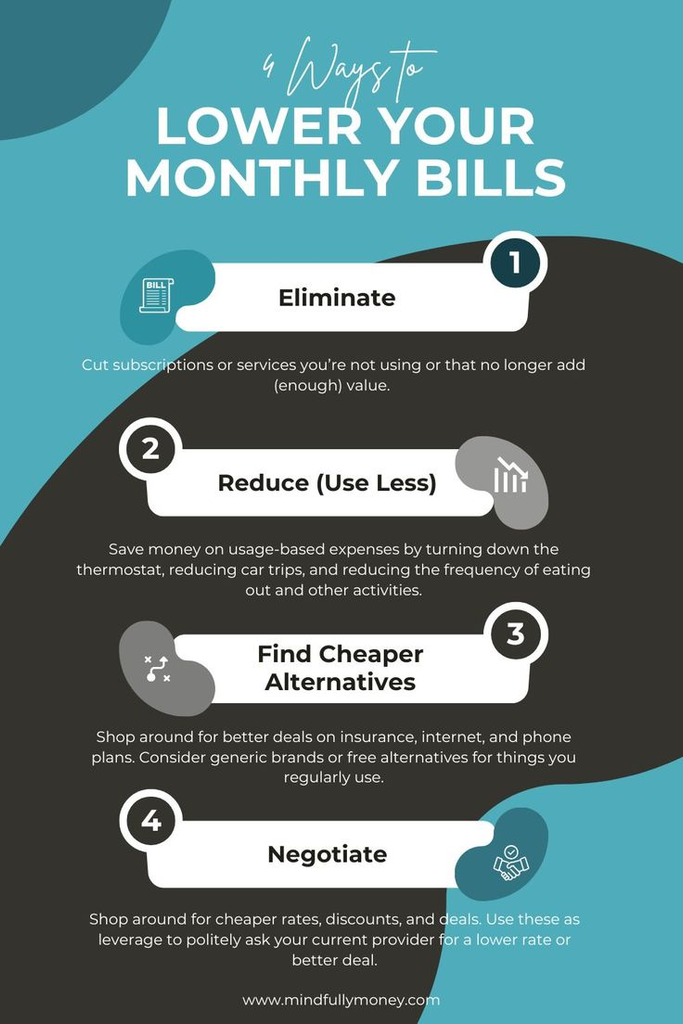
One of the easiest places to start is with services you no longer use.
Look for:
- Unused streaming subscriptions
- Old memberships
- Apps you rarely use
- Duplicate services
- Premium plans you don’t need
- Subscriptions you forgot about
If you’re paying $15 per month for a service you barely use, that’s:
$15 × 12 = $180 per year.
Canceling unnecessary recurring expenses can therefore have a bigger effect than it first appears.
Step 3: Review Your Internet Plan
Internet services can be another area worth reviewing.
Check:
- Your current monthly price
- Your internet speed
- Whether you actually use the available speed
- Whether your provider offers cheaper plans
- Whether promotional pricing has ended
- Whether you’re paying for features you don’t need
You don’t necessarily need the fastest available plan.
Choose a service that reasonably matches your household’s needs.
Step 4: Review Your Phone Plan
Take a similar approach with your mobile phone service.
Consider:
- How much data you actually use
- Whether you need unlimited data
- Whether you’re paying for additional lines
- Whether there are cheaper plans
- Whether your contract has changed
- Whether unused features are included
A cheaper plan that still provides what you need could reduce your monthly expenses without significantly changing your routine.
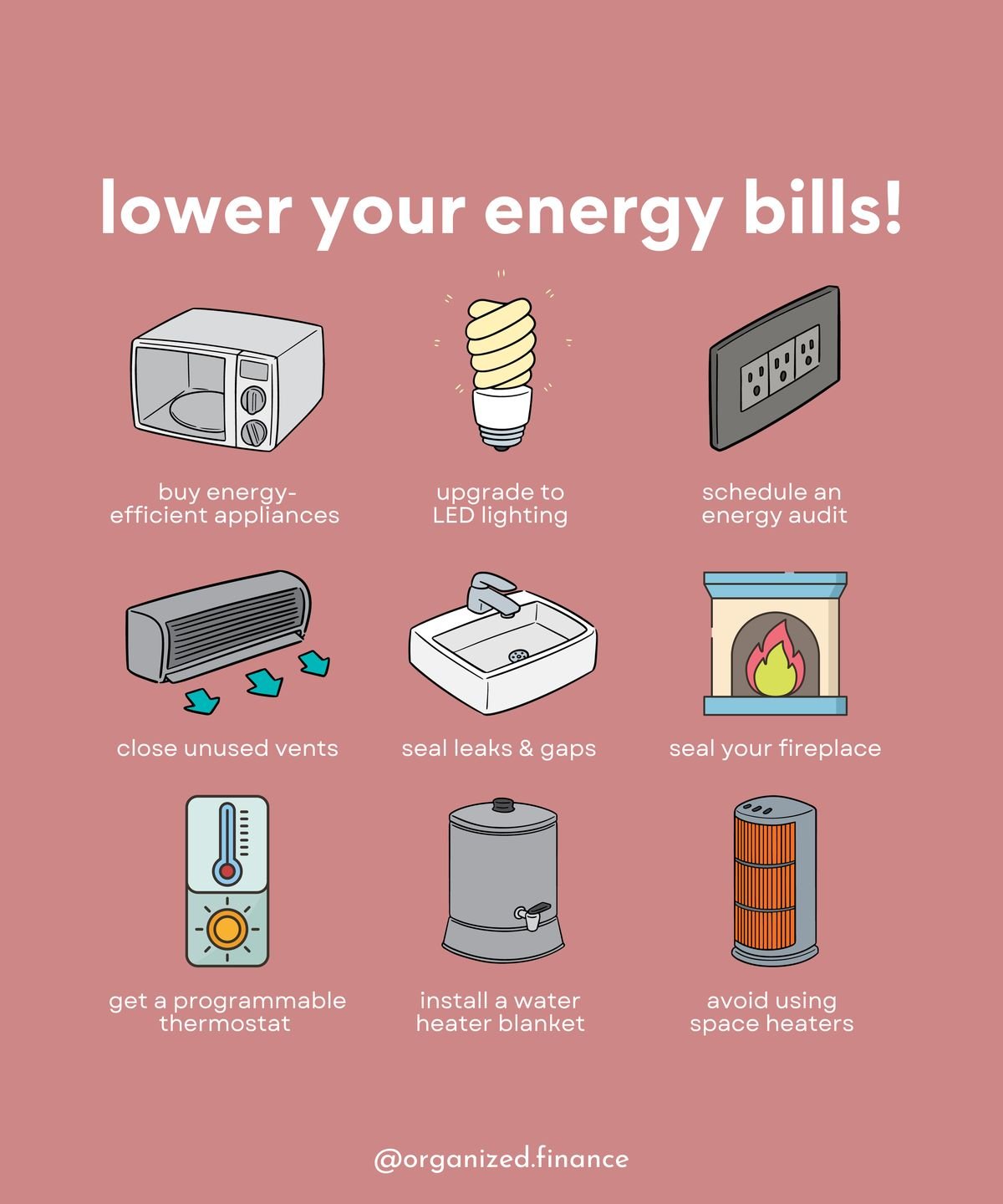
Step 5: Reduce Electricity Usage
Energy costs can vary significantly depending on your home, location, weather, and energy prices.
Simple habits can sometimes help reduce unnecessary consumption.
For example:
- Turn off lights when rooms aren’t being used
- Unplug devices that don’t need to remain connected
- Use energy-efficient lighting where practical
- Avoid unnecessarily running appliances
- Keep doors and windows properly closed when heating or cooling
- Use appliances efficiently
The exact savings will depend on your household and local energy costs.
The goal isn’t to make your home uncomfortable.
It’s to reduce energy that isn’t providing meaningful value.
Step 6: Be More Intentional With Heating and Cooling
Heating and cooling can be significant household expenses.
If possible, review your thermostat settings and heating or cooling habits.
You may be able to reduce costs by:
- Avoiding unnecessary heating or cooling
- Adjusting temperatures slightly
- Improving insulation where practical
- Keeping doors closed in unused rooms
- Maintaining heating and cooling equipment
Small changes can become more meaningful over longer periods.
Step 7: Plan Your Grocery Spending
Food is one of the most common variable household expenses.
Before shopping:
- Check what you already have
- Create a shopping list
- Plan several meals
- Compare prices
- Avoid buying items simply because they look appealing
- Consider store brands where appropriate
- Use food before it expires
Planning doesn’t mean buying the cheapest possible food.
It means reducing waste and making purchases intentionally.
Step 8: Reduce Food Waste
Food that gets thrown away is money that has already been spent.
To reduce waste, try to:
- Plan meals around food you already have
- Store food correctly
- Freeze items when appropriate
- Check expiration dates
- Buy quantities your household can reasonably use
If you regularly throw away certain foods, consider buying smaller quantities.
Step 9: Review Insurance Costs
Insurance is an important expense, so reducing the cost shouldn’t mean removing necessary protection without understanding the consequences.
Instead, review your policies periodically.
Depending on your circumstances, you may be able to:
- Compare providers
- Ask about available discounts
- Review unnecessary coverage
- Check whether your circumstances have changed
- Compare renewal prices
Never cancel important coverage simply to save money without understanding the risks and requirements involved.
Step 10: Review Transportation Costs
Transportation can consume a significant portion of a household budget.
Consider your regular costs:
- Fuel
- Public transportation
- Parking
- Insurance
- Maintenance
- Vehicle payments
- Tolls
Look for practical opportunities to reduce costs.
For example, combining errands into one trip can sometimes reduce unnecessary travel.
If public transportation is convenient and affordable in your area, it may also be an alternative for some journeys.
Step 11: Reduce Unnecessary Convenience Spending
Convenience can be useful, but frequent convenience purchases can quietly increase monthly expenses.
Examples include:
- Food delivery
- Frequent takeout
- Paid delivery fees
- Convenience-store purchases
- Repeated small online orders
You don’t have to eliminate these completely.
Instead, decide which conveniences provide enough value to justify their cost.
Step 12: Compare Recurring Services
Don’t assume your current provider is always offering the best deal.
Periodically compare available options for services such as:
- Internet
- Mobile phone
- Insurance
- Banking services
- Utilities where competition exists
- Subscriptions
Before switching, check the full terms and any fees.
The cheapest advertised price isn’t always the cheapest overall option.
Step 13: Watch Out for Price Increases
Some services increase their prices over time.
A service that originally cost $20 per month might eventually become $30 or $35.
That’s why reviewing recurring expenses periodically is useful.
Check your bills and ask:
Am I still receiving enough value from this service to justify the current price?
If not, look for alternatives.
Step 14: Negotiate Where Appropriate
Some service providers may offer discounts or alternative plans when customers contact them.
You can ask whether:
- A cheaper plan is available
- There are current promotions
- You qualify for a discount
- Your plan can be changed
- There are loyalty offers
There is no guarantee you’ll receive a discount, but asking can sometimes reveal options you weren’t aware of.
Step 15: Be Careful With Small Expenses
Large expenses are easy to notice.
Small expenses are easier to ignore.
Suppose you spend an extra $5 several times each week.
If that happens four times per week:
$5 × 4 × 52 = $1,040 per year.
The example doesn’t mean every $5 purchase should be eliminated.
It simply demonstrates why repeated small expenses deserve some attention.
Step 16: Create a Household Expense Limit
Instead of simply hoping to spend less, establish reasonable limits.
For example:
Groceries: $400/month
Entertainment: $100/month
Takeout: $75/month
Household supplies: $100/month
These numbers are only examples.
Your limits should reflect your actual household needs.
Step 17: Use a Weekly Spending Check
You don’t have to wait until the end of the month to discover that you’ve overspent.
Once a week, check:
- What have we spent?
- What bills are coming up?
- Are we within our budget?
- Did an unexpected expense occur?
- Do we need to adjust spending?
This makes it easier to respond while there’s still time left in the month.
Step 18: Build a Buffer for Unexpected Expenses
Trying to budget every dollar without leaving room for unexpected costs can make your budget difficult to maintain.
Where possible, include some flexibility for:
- Minor repairs
- Price changes
- Medical or household needs
- Transportation problems
- Replacement items
- Other unexpected expenses
A small buffer can prevent one unexpected expense from completely disrupting your monthly plan.
Step 19: Don’t Cut Important Expenses Blindly
Saving money doesn’t mean cutting everything possible.
Some expenses are worth maintaining.
For example:
- Necessary insurance
- Essential utilities
- Important maintenance
- Nutritious food
- Required transportation
- Necessary healthcare
The goal is to remove waste and unnecessary spending while maintaining important needs.
Step 20: Put Your Savings Toward a Goal
Once you reduce an expense, give the money a purpose.
For example, if you save $50 per month:
$50 × 12 = $600 per year.
You could direct that money toward:
- Emergency savings
- A large purchase
- Debt repayment
- Education
- Long-term savings
- Another financial goal
This makes expense reduction more meaningful because the money is working toward something specific.
Example: Reducing Monthly Household Expenses
Imagine a household identifies these potential savings:
Unused subscription: $15
Cheaper phone plan: $20
Reduced food waste: $30
Fewer delivery fees: $25
Lower unnecessary energy usage: $20
Total potential monthly savings:
$15 + $20 + $30 + $25 + $20 = $110
Over one year:
$110 × 12 = $1,320
The actual savings will vary, but the example shows how several small changes can add up.
Common Mistakes to Avoid
Cutting Everything at Once
Making too many changes can make a budget difficult to maintain.
Start with a few realistic adjustments.
Ignoring Quality
The cheapest option isn’t always the best value.
Consider quality, reliability, and long-term costs.
Canceling Important Coverage
Don’t remove essential insurance or services without understanding the consequences.
Focusing Only on Small Expenses
Small savings are useful, but larger recurring expenses may have a bigger impact.
Never Reviewing Bills
Prices and plans can change.
Review recurring expenses periodically.
Spending the Savings Elsewhere
If you reduce expenses but immediately spend the money somewhere else, you may not improve your financial position.
Give the savings a purpose.
A Simple Monthly Household Expense Review
At the end of each month, ask:
1. What did we spend the most money on?
2. Which expenses were necessary?
3. Which expenses could have been reduced?
4. Did any bills increase?
5. Are there subscriptions we no longer need?
6. Can we get a better deal on any services?
7. Are we wasting money on food or household supplies?
8. How much did we save this month?
9. Where should those savings go?
10. What should we change next month?
This simple review can help keep household expenses under control.
Leave a Reply