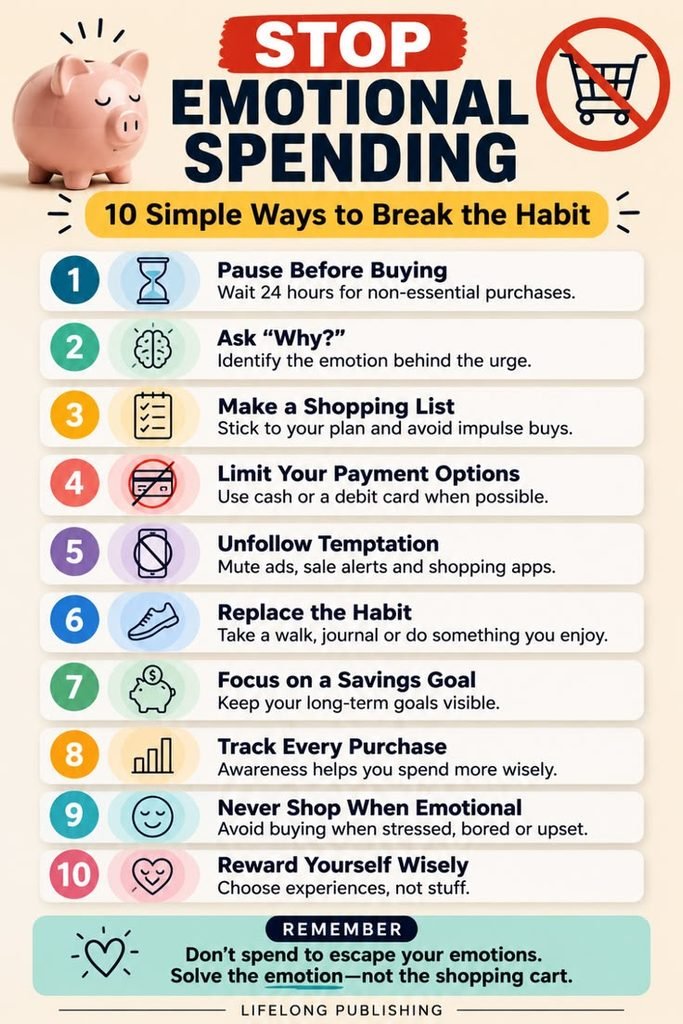
A spending spree can happen surprisingly quickly. You may make several impulse purchases, take an expensive trip, go out more than usual, or take advantage of too many sales and promotions. Then you check your bank account and realize that you spent far more than you intended.
Although overspending can be stressful, a spending spree does not have to create a permanent financial setback. The important thing is to stop the cycle, understand what happened, and create a realistic recovery plan.
Here are practical steps to help you recover financially after a spending spree.
1. Stop the Spending Immediately
The first step is simple: stop unnecessary spending.
Once you realize that you have overspent, it can be tempting to think that the damage has already been done. You might tell yourself that spending another $50 or $100 will not make much difference.
That mindset can make the situation worse.
For the next few days or weeks, avoid nonessential purchases while you assess your finances. Give yourself time to step away from shopping and focus on getting your budget under control.
2. Find Out Exactly How Much You Spent
Before you can recover, you need to know the size of the problem.
Review your bank statements, credit card accounts, receipts, and payment apps. Add up your spending and compare it with what you originally planned to spend.
For example, if you intended to spend $400 on discretionary purchases but spent $700, your spending spree created a $300 gap.
Knowing the exact amount makes the situation less overwhelming because you now have a specific number to address.
Also check how much money you currently have available and what bills are still due.
3. Identify What Triggered the Spending Spree
Understanding why you overspent can help you prevent it from happening again.
Think about what happened before the spending spree. Were you stressed, bored, celebrating, or trying to make yourself feel better? Did a sale or limited-time offer encourage you to buy things you did not need?
Social media can also influence spending. Seeing other people buying clothes, gadgets, vacations, or expensive experiences can create pressure to spend.
Once you identify your triggers, you can create strategies to manage them.
4. Return What You Don’t Need
If some purchases are still eligible for return, review them carefully.
Ask yourself whether you genuinely need each item or whether you bought it impulsively.
Returning unnecessary purchases can be one of the fastest ways to recover some of the money from a spending spree.
Check the retailer’s return policy, deadlines, fees, and refund method before returning anything. Keep receipts and documentation until the refund has been completed.
The goal is not to return things you genuinely need simply because you overspent. Focus on purchases that were unnecessary or made impulsively.
5. Protect Your Essential Expenses
After a spending spree, make sure your essential financial obligations remain your priority.
Calculate how much money you need for housing, utilities, groceries, transportation, insurance, and required debt payments.
Do not use money needed for essential bills to continue discretionary spending.
If you discover that you may not have enough money for an important payment, address the situation early. Waiting until a bill is overdue can create additional stress and potential fees.
6. Create a Temporary Recovery Budget
Your regular budget may need to be adjusted temporarily.
Start with your expected income and subtract essential expenses and required payments. Then determine how much money remains available for optional spending.
For the next few weeks, consider setting a lower discretionary spending limit while you recover.
A temporary recovery budget can help you regain control without requiring you to completely change your lifestyle.
The key is to make the plan realistic enough that you can actually follow it.
7. Have a Short No-Spend Period
A no-spend period can be useful after a spending spree.
Choose a realistic timeframe, such as several days or one week. During this period, avoid unnecessary purchases while continuing to pay for essential expenses.
Use what you already have at home. Cook meals with existing groceries, avoid browsing shopping websites, and choose free activities for entertainment.
A short break from spending can help interrupt the habit and make you more conscious of your purchasing decisions.
8. Be Careful With Credit Cards
If you used credit cards during the spending spree, review the balances carefully.
Remember that credit card spending is borrowed money that will eventually need to be repaid. Interest can make the purchases more expensive if balances remain unpaid.
Avoid adding new unnecessary purchases to the balance while you are trying to recover.
Continue making required payments on time. If your budget allows, consider putting extra money toward high-interest debt after covering essential expenses.
9. Rebuild Your Savings
If the spending spree caused you to use money from your savings, make rebuilding that money one of your financial priorities.
You do not have to replace everything at once.
Start with a manageable amount and contribute consistently. An automatic transfer can make this easier because the money is moved into savings without requiring a decision every time.
As your finances improve, gradually increase the amount you save.
Rebuilding your savings can also give you greater protection against future unexpected expenses.
10. Find Temporary Ways to Save Money
Look for expenses that you can reduce while recovering.
You might pause subscriptions, eat at home more often, avoid unnecessary shopping, compare prices, or postpone large purchases.
Review your recurring expenses as well. A spending spree is often a good reminder to examine whether you are still paying for services you rarely use.
You do not need to cut everything permanently. Temporary savings can provide breathing room while your finances recover.
11. Consider Increasing Your Income
Reducing expenses is only one part of financial recovery.
If you need additional money, consider legitimate ways to temporarily increase your income. Depending on your circumstances, this might include selling unused items, taking on freelance work, working additional hours, or finding another suitable source of extra income.
Additional income can help rebuild savings or reduce debt more quickly.
However, it is important to address the reason for the spending spree as well. Earning more money will not solve the problem if unnecessary spending continues.
12. Create Rules for Future Purchases
After recovering, put simple rules in place to make another spending spree less likely.
For example, you could use a 24-hour waiting period before making expensive purchases. For particularly large purchases, you might wait a week before deciding.
You could also remove saved payment information from shopping websites, unsubscribe from promotional emails, or delete shopping apps from your phone.
Another useful strategy is creating a specific monthly allowance for discretionary spending. Once that amount is used, wait until the next budget period before spending more.
13. Don’t Let Guilt Control Your Finances
Feeling guilty after overspending is understandable, but guilt does not create a recovery plan.
Avoid punishing yourself with unrealistic financial restrictions. Instead, focus on making better decisions from this point forward.
You may have made a financial mistake, but that does not mean you are bad with money or incapable of improving.
Treat the experience as useful information. It showed you where your spending habits need attention.
Conclusion
Recovering financially after a spending spree starts with accepting what happened and taking action quickly. Stop unnecessary spending, review your transactions, determine exactly how much you overspent, and protect your essential expenses.
From there, create a temporary recovery budget, consider returning unnecessary purchases, reduce optional expenses, and manage credit card debt carefully. If you used savings, make rebuilding them part of your financial plan.
Most importantly, identify what triggered the spending spree and create safeguards for the future.
A single spending spree does not have to define your financial future. With patience, discipline, and consistent habits, you can recover your money, regain control of your budget, and build a healthier relationship with spending.
Leave a Reply